Few places in India have played as central a role in ancient history as Bihar. Archaeological sites such as Chirand, on the banks of the Ganga, show settled farming communities in the Neolithic period. By the 6th century BCE the region was home to powerful states, including the kingdom of Magadha and the Vajji confederacy, whose capital Vaishali is often cited as one of the world's early examples of a republic. Magadha's first capital was Rajgir, surrounded by hills and ancient stone walls that can still be traced today.
Bihar is deeply connected with the origins of two world religions. Siddhartha Gautama attained enlightenment under the Bodhi tree at Bodh Gaya and became the Buddha, and he spent much of his life teaching in the region. The Mahabodhi Temple at Bodh Gaya is a UNESCO World Heritage Site and a pilgrimage centre for Buddhists from across the world. Vardhamana Mahavira, the 24th Jain Tirthankara, was born near Vaishali and attained nirvana at Pawapuri, which remains an important Jain pilgrimage site.
Magadha grew into the core of India's first great empires. The capital moved to Pataliputra, modern Patna, and in the 4th century BCE Chandragupta Maurya founded the Mauryan empire. His grandson Ashoka ruled much of the subcontinent in the 3rd century BCE and spread the message of Buddhism. Mauryan remains include the Barabar Caves, with their polished rock-cut chambers, and the excavated pillared hall at Kumhrar in Patna. Centuries later the Gupta dynasty, also based in Magadha, presided over a golden age of art and learning from around the 4th century CE. Nalanda Mahavihara, founded in the Gupta period, became one of the great centres of learning in Asia and attracted scholars such as Xuanzang. Its ruins are now a UNESCO World Heritage Site. Under the Pala kings, Vikramashila became another famous monastic university.
Nalanda and Vikramashila declined after attacks at the end of the 12th century, and the region came under the Delhi Sultanate and later regional rulers. In the 16th century Sher Shah Suri, whose family held a jagir at Sasaram, briefly displaced the Mughals and built an efficient administration. His grand tomb at Sasaram is one of the finest examples of Indo Islamic architecture. Under the Mughals, Patna was an important provincial centre. Guru Gobind Singh, the tenth Sikh Guru, was born in Patna in 1666, and Takht Sri Patna Sahib marks his birthplace.
The British East India Company's victory at the Battle of Buxar in 1764 gave it control over Bengal, Bihar and Orissa. In 1857 the elderly Kunwar Singh of Jagdishpur led a determined revolt against the British. In 1917 Mahatma Gandhi launched his first major satyagraha in India in Champaran, supporting indigo farmers, and Bihar went on to play a strong role in the freedom movement. Dr Rajendra Prasad, who became India's first President, was from Bihar.
Bihar was separated from the Bengal Presidency in 1912 as the province of Bihar and Orissa, and Orissa became a separate province in 1936. After independence Bihar became a state of India with Patna as its capital. In 2000 its southern districts were carved out to form the new state of Jharkhand, giving Bihar its present boundaries.
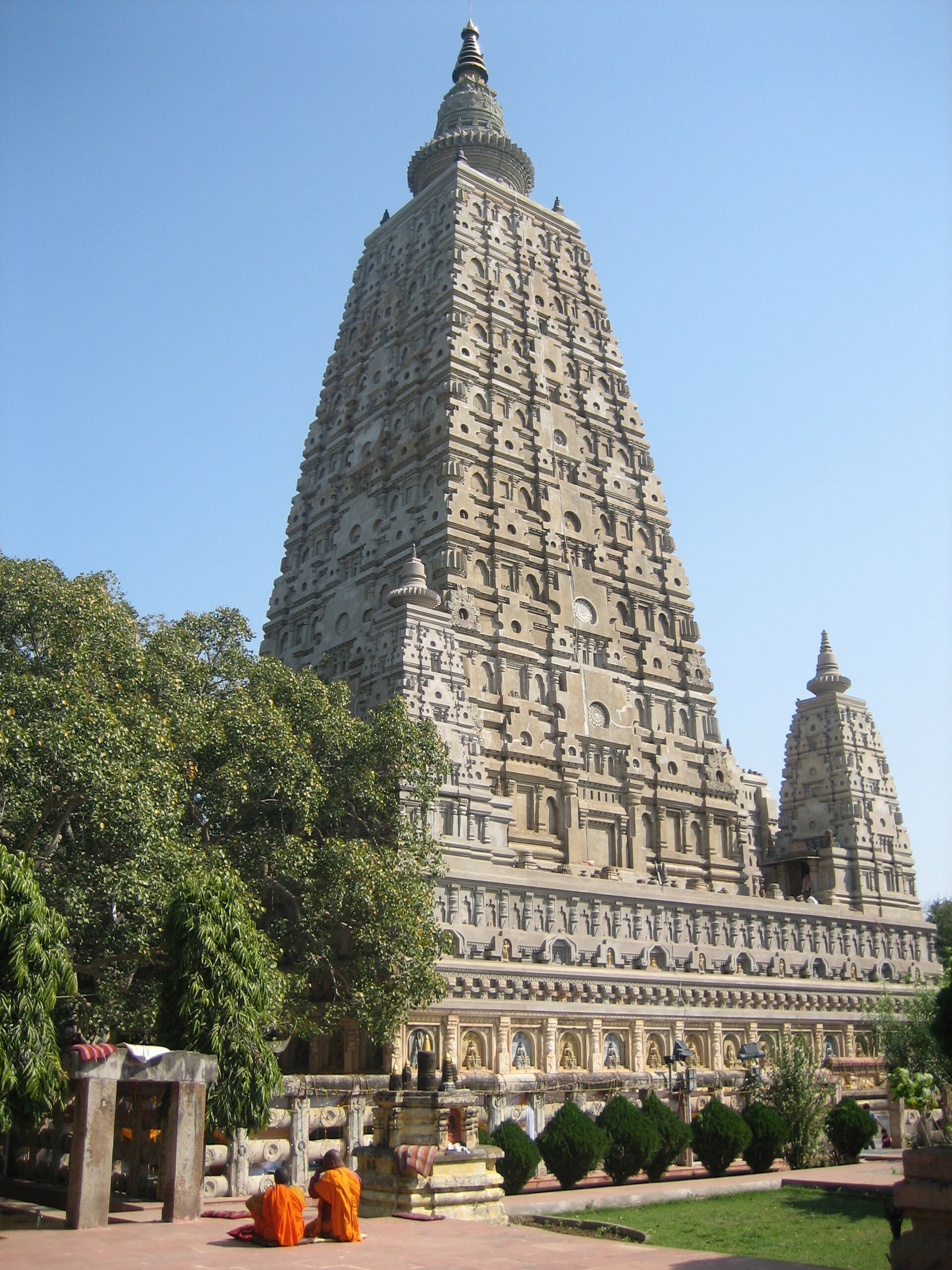
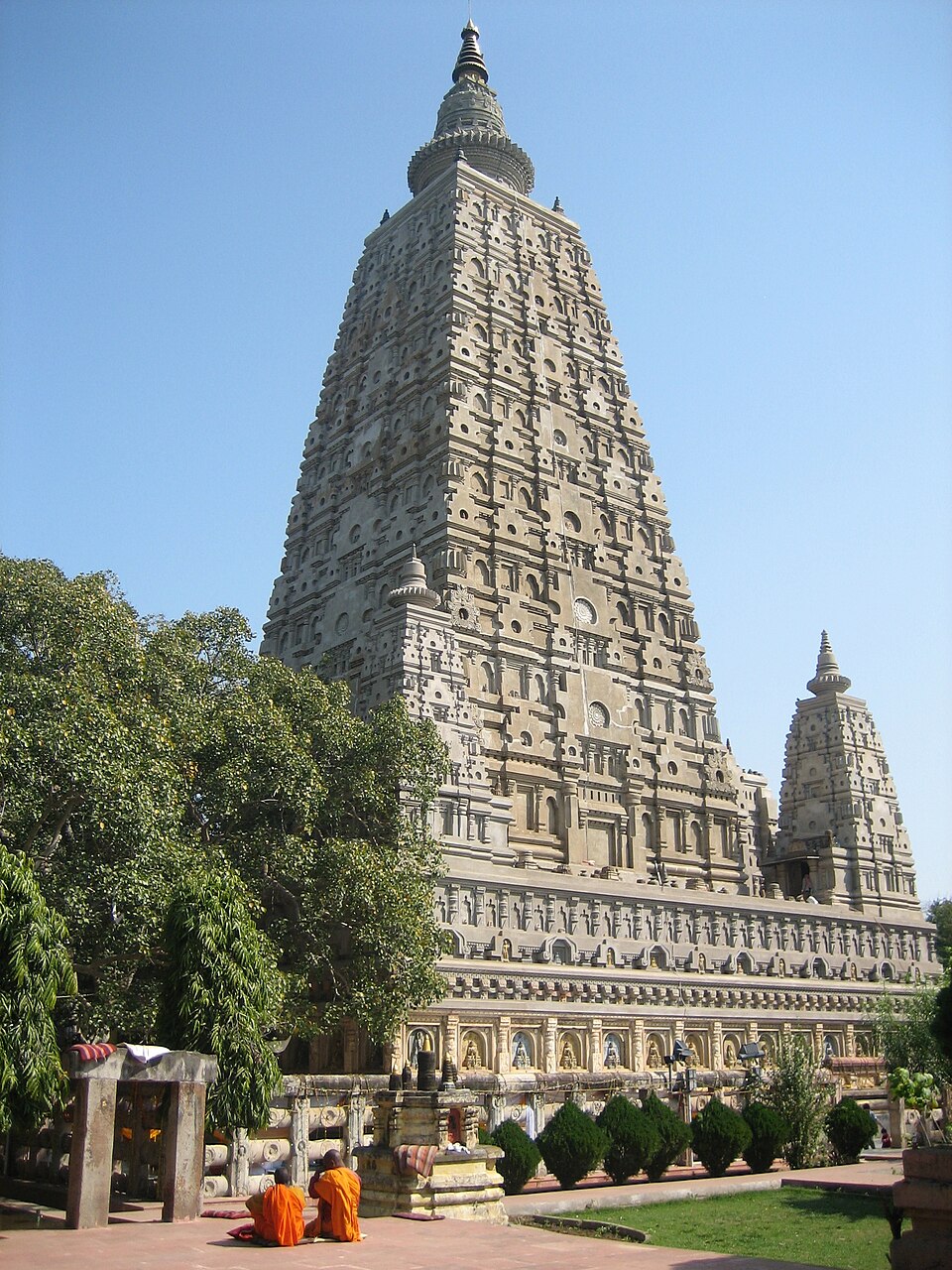 Photo: Bpilgrim, CC BY-SA 2.5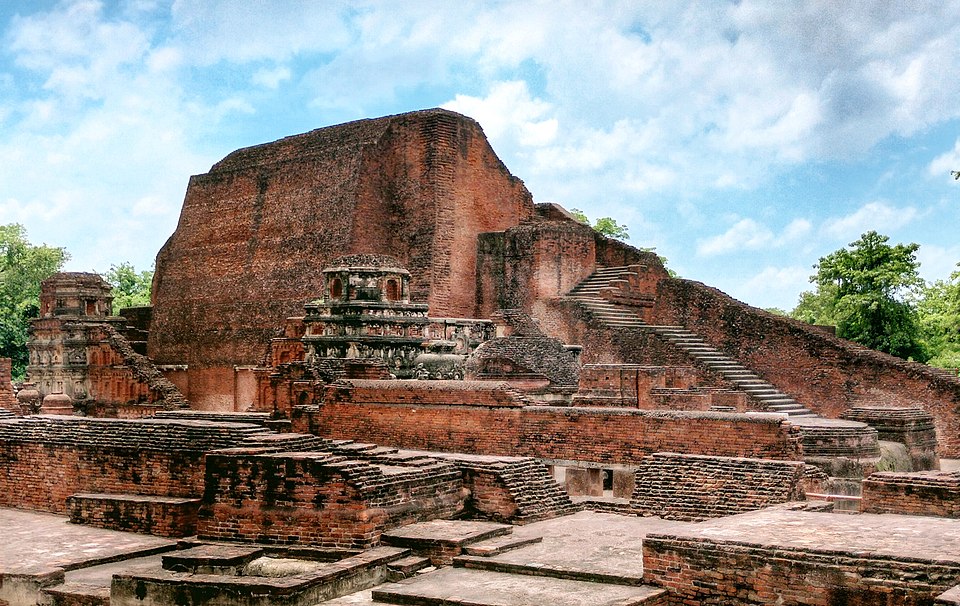
.jpg/960px-Shanti_Stupa_at_Rajgir_(cropped).jpg)
.jpg/960px-N-BR-69_Raja_Vishal_Garh_(5).jpg)

.jpeg/500px-Taj_Mahal_(Edited).jpeg)
.jpg/500px-Darjeeling_Himalayan_Railway,toy_train_(3).jpg)