Rajasthan's dry landscapes hide a very long human story. Mesolithic hunters camped at Bagor near Bhilwara thousands of years ago, and the Ahar culture near Udaipur and the copper working settlements around Ganeshwar show early farming and metal working communities. In the far north, Kalibangan in Hanumangarh district was an important town of the Indus Valley Civilisation, where archaeologists found ploughed fields, fire altars and planned streets. Later, the Matsya kingdom of the epic age is associated with the area around Jaipur and Alwar, and at Bairat, also called Viratnagar, there are remains of a Buddhist monastery and an edict of the Mauryan emperor Ashoka.
From around the 7th and 8th centuries new ruling clans emerged who came to be known as Rajputs. The Gurjara Pratiharas built a large empire across north India, and over the following centuries the Chauhans ruled from Ajmer, the Guhilas, later known as Sisodias, from Mewar, the Rathores from Marwar, the Kachhwahas from Amber and the Bhatis from Jaisalmer. This period also produced the exquisite marble Jain temples at Dilwara on Mount Abu.
In the medieval centuries the Rajput states faced the Delhi Sultanate and later the Mughals. Alauddin Khalji besieged Chittorgarh in 1303, and in the 15th century Rana Kumbha of Mewar built Kumbhalgarh and the Vijay Stambha victory tower at Chittor. Rao Jodha founded Jodhpur in 1459, below the mighty Mehrangarh Fort. Rana Sanga fought Babur at Khanwa in 1527, and Maharana Pratap resisted Akbar at Haldighati in 1576. Many other Rajput houses, notably the Kachhwahas of Amber, became close Mughal allies. The Sufi shrine of Khwaja Moinuddin Chishti at Ajmer became one of India's great pilgrimage places, and six hill forts, including Chittorgarh, Kumbhalgarh, Ranthambore, Gagron, Amber and Jaisalmer, are now together a UNESCO World Heritage Site.
As Mughal power declined in the 18th century, Sawai Jai Singh II founded the planned city of Jaipur in 1727 and built the astronomical observatories known as Jantar Mantar. The Marathas then raided and taxed much of the region. In the early 19th century most Rajput states signed treaties with the British East India Company, keeping their rulers under British supervision, and the region became known as Rajputana. Ajmer was administered directly by the British. During the revolt of 1857 there were uprisings at Nasirabad, Kota and elsewhere. In the 20th century peasant movements such as the one at Bijolia and the Praja Mandal organisations in the princely states campaigned for rights and responsible government.
After independence in 1947 nineteen princely states, along with three chiefships, were brought together in stages. The process began in 1948, and on 30 March 1949 the Union of Greater Rajasthan was formed with Jaipur as its capital, a date now celebrated as Rajasthan Day. Further mergers followed, and the integration was completed on 1 November 1956 under the States Reorganisation Act, when Ajmer and the area around Mount Abu were added. Since 2000 Rajasthan has been India's largest state by area.
Few places in India let travellers walk through history quite like Rajasthan. Its palaces, stepwells, havelis and desert forts, from Amber and Mehrangarh to the golden walls of Jaisalmer, still stand largely intact, and many former royal residences now welcome visitors as museums and heritage hotels.
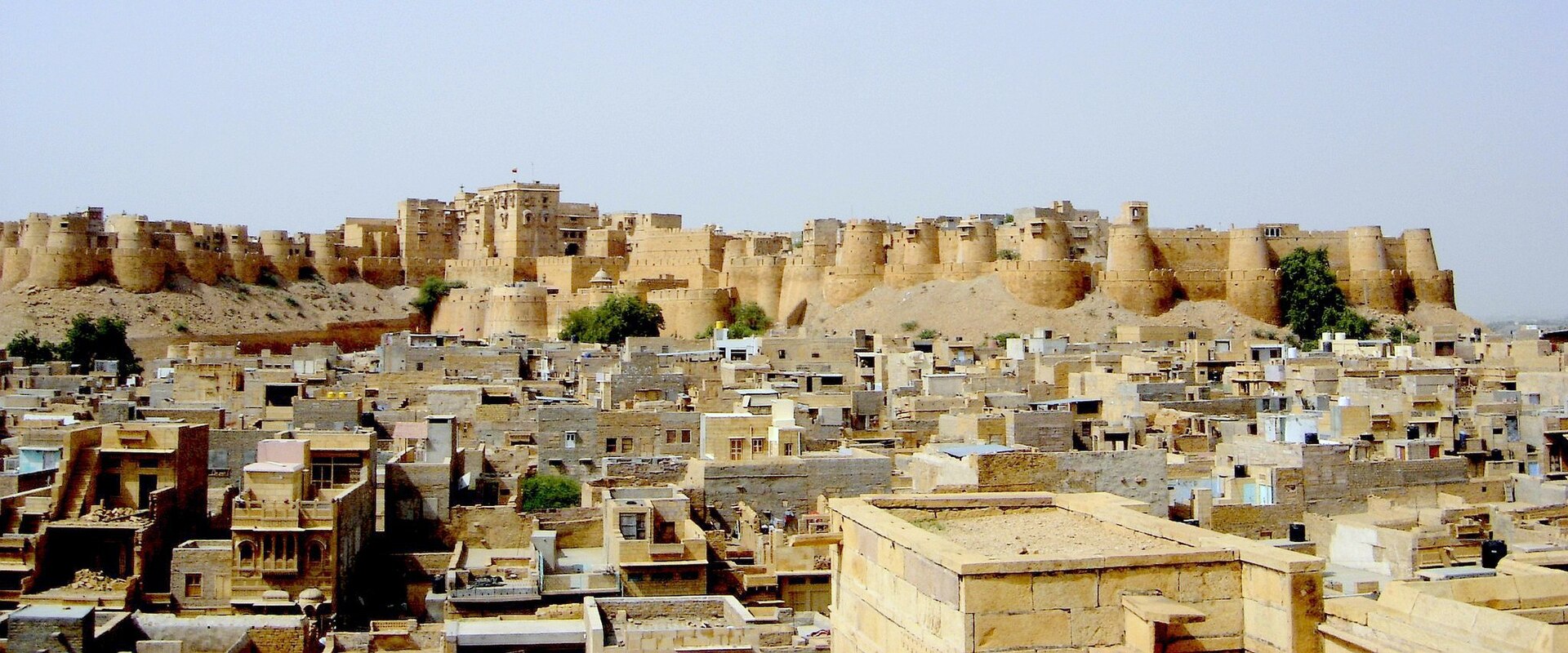
 Photo: Jakub Hałun, CC BY-SA 4.0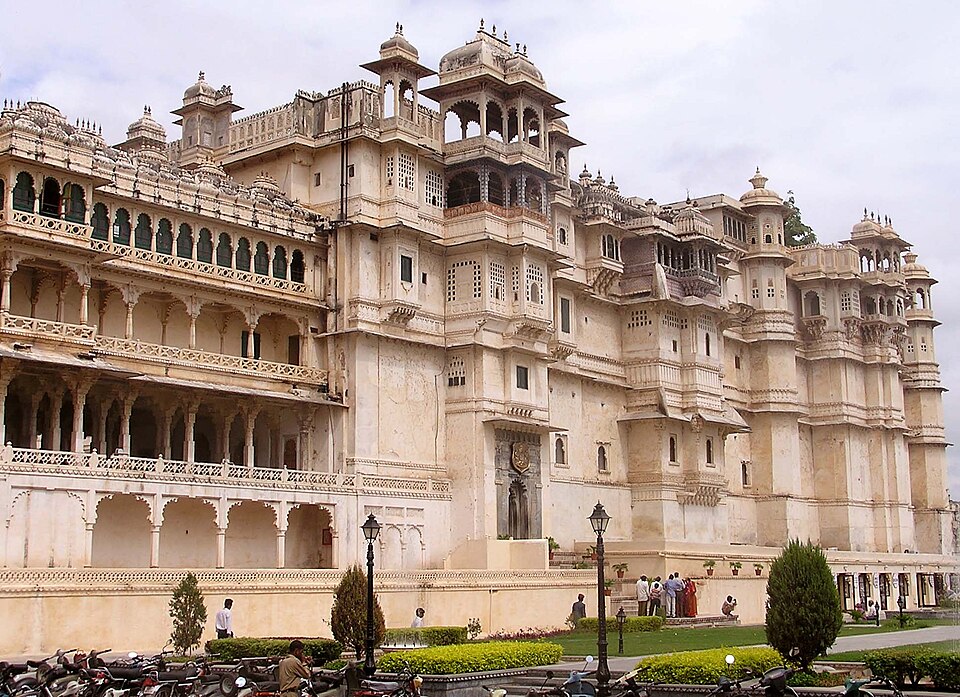


.JPG/960px-Dargah_of_Sufi_saint_Moinuddin_Chishti_Ajmer_India_(5).JPG)