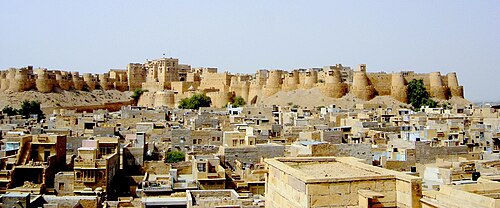
Gujarat has one of the longest recorded histories in India. It was an important region of the Harappan or Indus Valley Civilisation, which flourished from around the middle of the 3rd millennium BCE. Lothal, near the Gulf of Khambhat, is known for a large basin often interpreted as a dockyard, and Dholavira, on an island in the Rann of Kutch, has impressive water reservoirs and stone architecture. Dholavira was declared a UNESCO World Heritage Site in 2021, and both sites can be visited today.
In the 3rd century BCE Gujarat was part of the Mauryan empire. A large boulder at Junagadh, at the foot of Girnar hill, carries rock edicts of Ashoka, along with later inscriptions of the Western Kshatrapa ruler Rudradaman from the 2nd century CE and of the Gupta emperor Skandagupta. From around the 5th century CE the Maitraka dynasty ruled from Valabhi, which became a noted centre of learning.
From the 10th century the Chaulukya, or Solanki, dynasty ruled from Anhilwad Patan and presided over a golden age of art and architecture. The Sun Temple at Modhera, built in the early 11th century, and the richly carved stepwell of Rani ki Vav at Patan, now a UNESCO World Heritage Site, date from this period, as do many Jain temples. Around 1025 the temple of Somnath on the coast was raided by Mahmud of Ghazni, and the shrine has been rebuilt several times over the centuries. Jain pilgrims still climb to the temple cities on Shatrunjaya hill at Palitana and on Girnar.
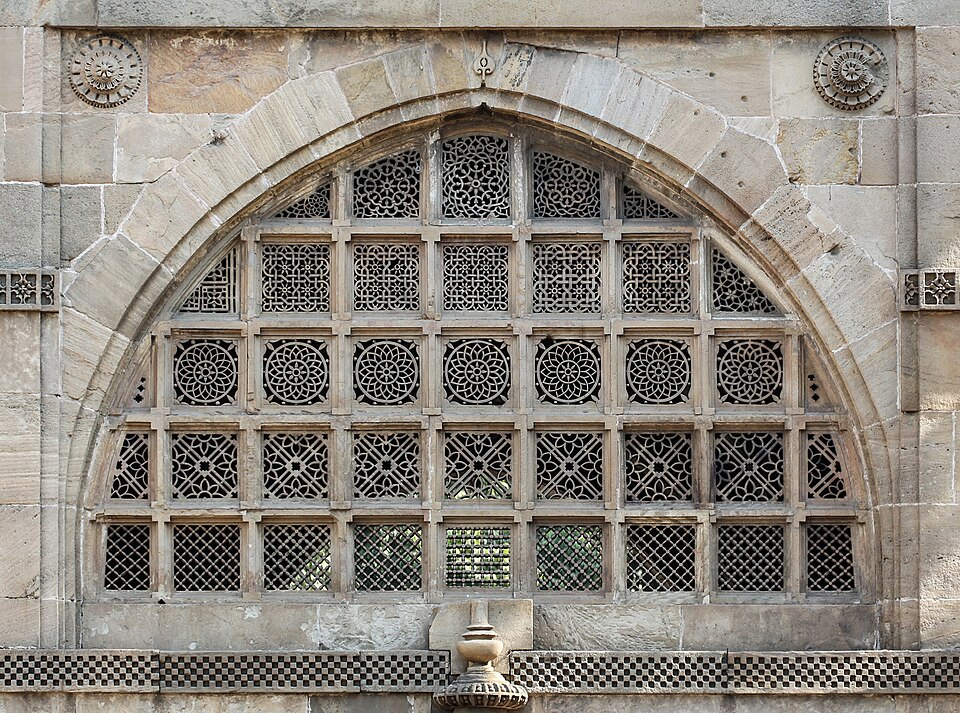
At the end of the 13th century the Delhi Sultanate took control of Gujarat. In the early 15th century the region became an independent sultanate, and Sultan Ahmed Shah founded Ahmedabad in 1411. The old walled city of Ahmedabad, with its mosques, pols and carved wooden houses, became India's first city on the UNESCO World Heritage list in 2017. Sultan Mahmud Begada later developed Champaner, whose ruins form the Champaner Pavagadh Archaeological Park. In 1573 the Mughal emperor Akbar annexed Gujarat, and the port of Surat grew into one of the busiest in the empire, where the English East India Company set up an early trading post in the early 17th century.
In the 18th century the Marathas extended their power across Gujarat, and the Gaekwad dynasty established itself at Baroda, now Vadodara. Under British rule, parts of Gujarat were directly administered as part of the Bombay Presidency, while hundreds of princely states, especially in Saurashtra and Kutch, remained under local rulers. Gujarat played a central role in the freedom movement. Mahatma Gandhi was born in Porbandar in 1869, set up the Sabarmati Ashram in Ahmedabad, and began the Salt March to Dandi from there in 1930. Sardar Vallabhbhai Patel led the Bardoli Satyagraha in 1928 and later helped integrate the princely states into India.
After independence, the princely states were merged into the states of Saurashtra and Kutch, which later became part of a larger Bombay State. Following movements for linguistic states, Bombay State was divided on 1 May 1960 into Gujarat and Maharashtra. Ahmedabad served as the first capital, and the planned city of Gandhinagar later became the capital. Today travellers can follow this history from Dholavira and Lothal to Patan, Champaner, Ahmedabad and the Gandhi sites of Porbandar and Sabarmati.

 Photo: Prof Ranga Sai, CC BY-SA 4.0


.jpg/960px-Somanath_mandir_(cropped).jpg)



.jpg/960px-DHOLAVIRA_SITE_(24).jpg)
.jpg)
.jpg/500px-Diu,Gujarat,India_(37).jpg)