Telangana lies on the Deccan plateau, and people have lived on its rocky uplands since prehistoric times. Megalithic burial sites with stone circles are scattered across the region, marking communities of the Iron Age. In the centuries around the beginning of the common era the Satavahana dynasty ruled much of the Deccan, and early Satavahana coins and remains have been found at sites such as Kotilingala in Karimnagar district. Buddhism flourished at this time, and the remains of stupas and monasteries at Phanigiri, Nelakondapalli and Dhulikatta show how widely it spread through the region.
After the Satavahanas the area was ruled by a succession of dynasties, including the Ikshvakus, the Vishnukundins, branches of the Chalukyas and the Rashtrakutas. The most celebrated rulers of medieval Telangana were the Kakatiyas, who governed from Orugallu, now Warangal, from around the 12th to the early 14th century. Under rulers such as Ganapati Deva and the remarkable queen Rudramadevi they built tanks for irrigation and graceful temples. The Ramappa Temple near Palampet, known for its finely carved stone and lightweight bricks, is a UNESCO World Heritage Site, while the Thousand Pillar Temple in Hanamkonda and the great gateways of Warangal Fort are also well worth visiting.
The Kakatiya kingdom fell to the Delhi Sultanate in 1323. Local chiefs soon reasserted themselves, and the region later came under the Bahmani Sultanate. In the early 16th century the Qutb Shahi dynasty established an independent kingdom based at Golconda, a fortress city that became famous for its diamond trade. In 1591 Muhammad Quli Qutb Shah founded the new city of Hyderabad beside the Musi river, with the Charminar at its heart. The ruins of Golconda Fort and the domed Qutb Shahi tombs nearby are among the city's most atmospheric historic sites.
The Mughal emperor Aurangzeb captured Golconda in 1687. In the early 18th century, as Mughal authority weakened, the governor Nizam ul Mulk established the Asaf Jahi dynasty, and Hyderabad State became the most populous princely state in India. The Nizams entered into an alliance with the British East India Company in 1798, and Secunderabad grew as a major British cantonment beside Hyderabad. Under the last Nizam, Mir Osman Ali Khan, Osmania University was founded in 1918. The Chowmahalla and Falaknuma palaces reflect the grandeur of the Nizams' court.
When India became independent in 1947, the Nizam initially did not accede to India. During this time the region also saw a major peasant uprising known as the Telangana armed struggle. In September 1948 the Indian Army entered Hyderabad in an operation known as Operation Polo, and the state was integrated into India. It remained Hyderabad State until 1 November 1956, when its Telugu speaking Telangana region was merged with Andhra State to form Andhra Pradesh, with Hyderabad as the capital.
Demands for a separate Telangana state continued for decades, and on 2 June 2014 Telangana was formed as a new state, the youngest in India. Hyderabad served as the shared capital of both Telangana and Andhra Pradesh for a period of up to ten years, and is now Telangana's capital. Today visitors can move from Kakatiya temples in Warangal to the Qutb Shahi and Nizam era monuments of Hyderabad in a single journey.
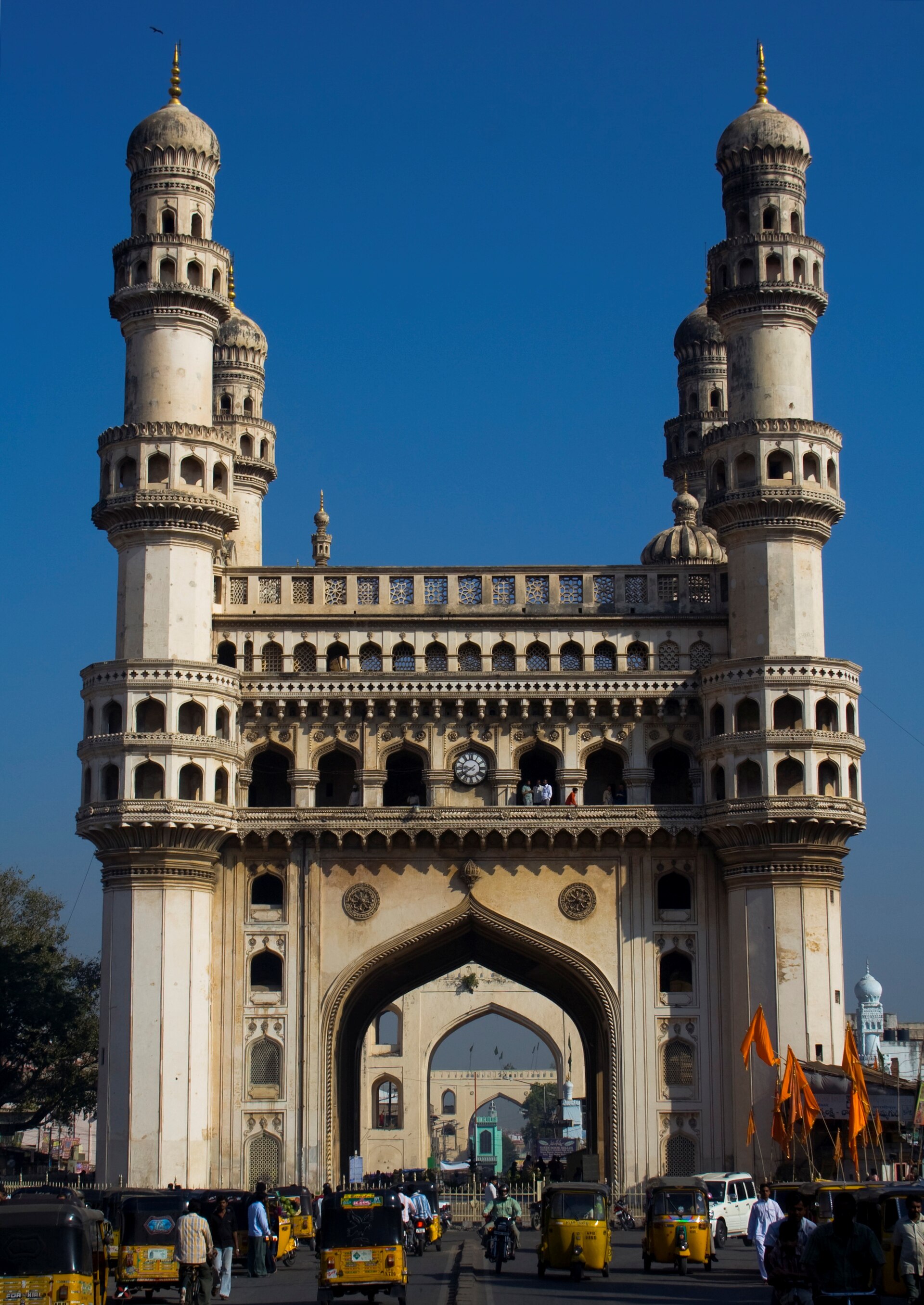
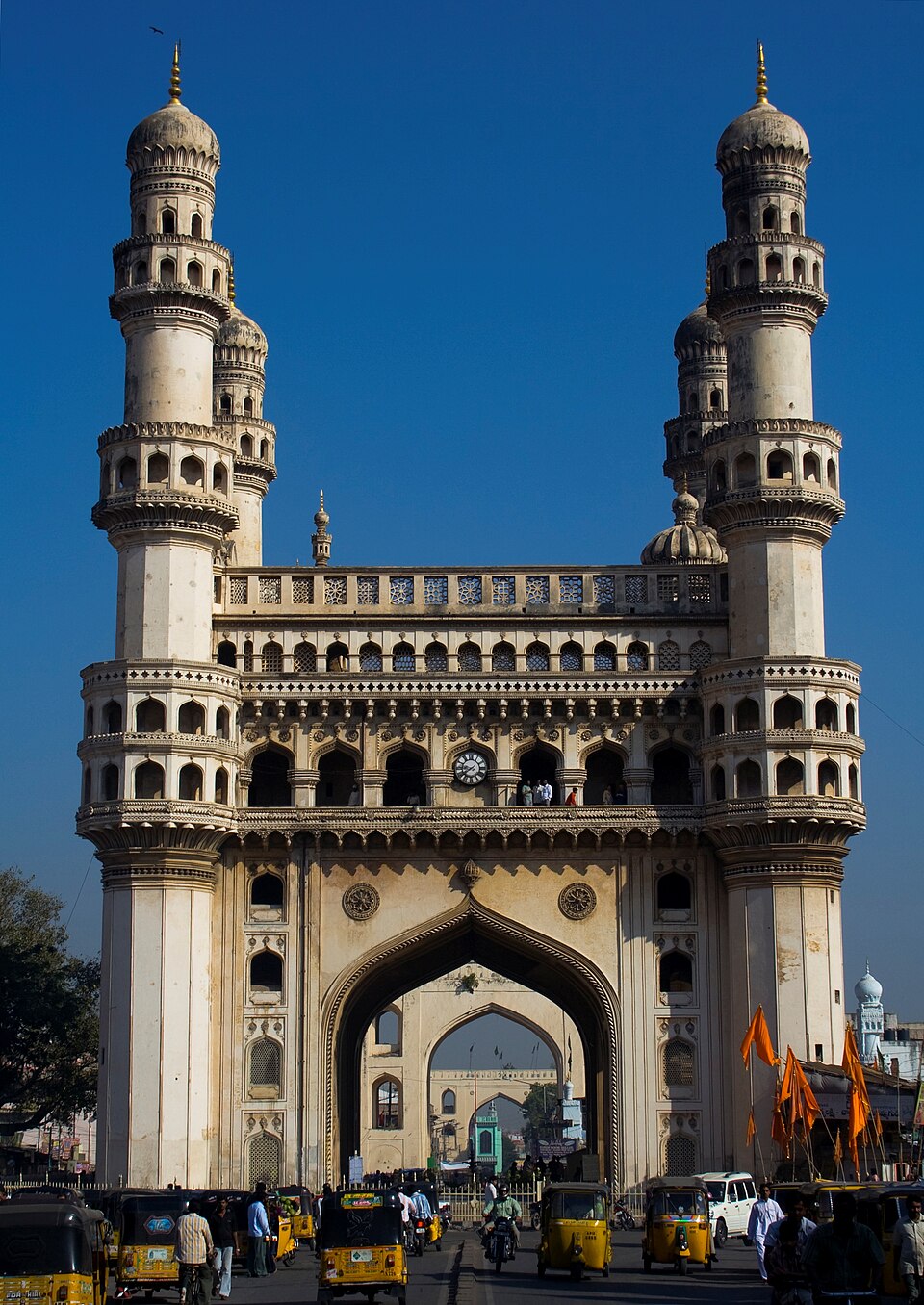 Photo: DidierTais, CC BY-SA 3.0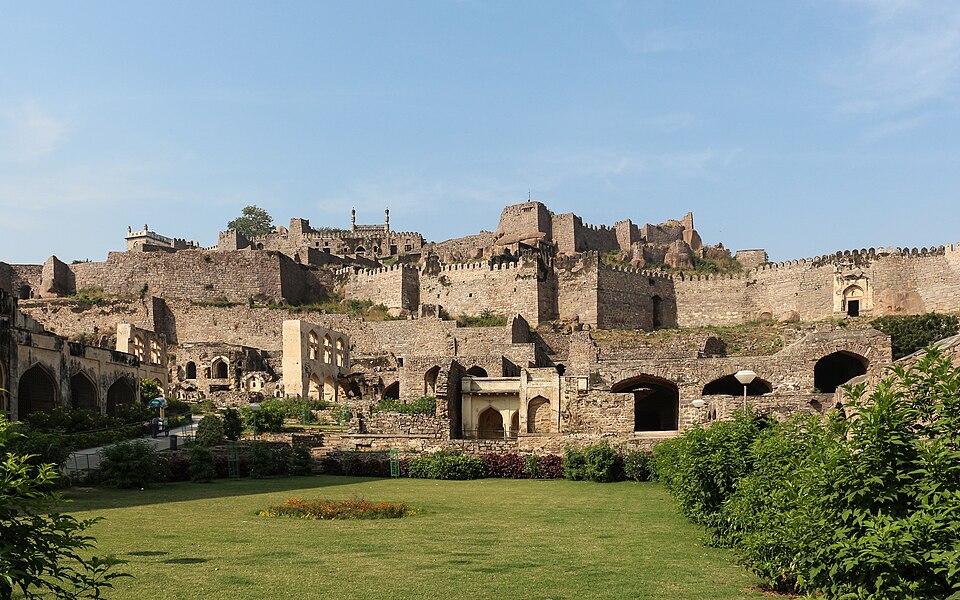


.jpg/960px-Ramappa_Temple_(Human_Scale).jpg)


_(cropped).jpg/500px-Wide_angle_of_Galigopuram_of_Virupaksha_Temple,_Hampi_(04)_(cropped).jpg)
