Nagaland is a mountainous state on India's border with Myanmar, home to many Naga tribes, including the Angami, Ao, Sumi, Lotha, Konyak, Chakhesang and others. Each tribe has its own language, dress and customs, and together they share a rich heritage of oral history, song and craft. Naga oral traditions describe migrations into the hills long ago, and the village of Khezhakeno is remembered in several traditions as an ancient point of dispersal. Stone monuments, raised to mark feasts of merit and important events, are found in many villages and form a distinctive part of the landscape.
Traditional Naga villages were largely self governing, often built on hilltops for defence, and organised around clans and village councils. The morung, a communal house for young men, served as a place of learning, training and storytelling. Warfare between villages was once common, and many communities practised headhunting until it was ended in the colonial period. Terraced rice fields, especially among the Angami and Chakhesang, show a long tradition of skilled farming.
The Naga Hills had long contact with neighbouring kingdoms in the plains. The chronicles of the Ahom kingdom of Assam, known as Buranjis, record trade, alliances and conflicts with Naga villages from the 13th century onward. At Dimapur, ruins of the old capital of the Dimasa Kachari kingdom include tall carved stone pillars. The city was abandoned in the 16th century after conflict with the Ahoms, and its remains can still be visited today.
British contact began in the 1830s, as officials in Assam sent expeditions into the hills. In 1866 the Naga Hills district was created, with its headquarters first at Samaguting and later at Kohima. The Angami village of Khonoma resisted fiercely, and the battle there in 1879 to 1880 is remembered as one of the strongest stands against British expansion. American Baptist missionaries arrived from the 1870s, and Christianity, along with schools and written forms of Naga languages, spread widely during the following decades. In 1918 educated Nagas formed the Naga Club, which later presented a memorandum to the Simon Commission in 1929 expressing their wish to be left free to decide their own future.
During the Second World War, Kohima was the scene of one of the most important battles of the Burma campaign. In 1944 Japanese forces advanced into the Naga Hills, and fierce fighting, including around the tennis court of the Deputy Commissioner's bungalow, halted their advance. Together with the Battle of Imphal, it marked a turning point in the war in Asia. The Kohima War Cemetery, built on the battlefield itself, is a moving place to visit.
After the war, the Naga National Council was formed in 1946, and the following years saw a long political movement and periods of armed conflict over the future of the Naga Hills. In 1957 the Naga Hills district and the Tuensang Frontier Division were joined into a single administrative unit. After a sixteen point agreement between Naga leaders and the Government of India in 1960, Nagaland was inaugurated as the 16th state of India on 1 December 1963, with Kohima as its capital. Today the Hornbill Festival, held each December at the Kisama Heritage Village near Kohima, celebrates the traditions of all the Naga tribes.
.jpg/1920px-Breathtaking_beauty_of_Dzukou_Valley_in_Manipur-Nagaland_border_(edit).jpg)
 Photo: Sarangakrishnachetia, CC BY-SA 4.0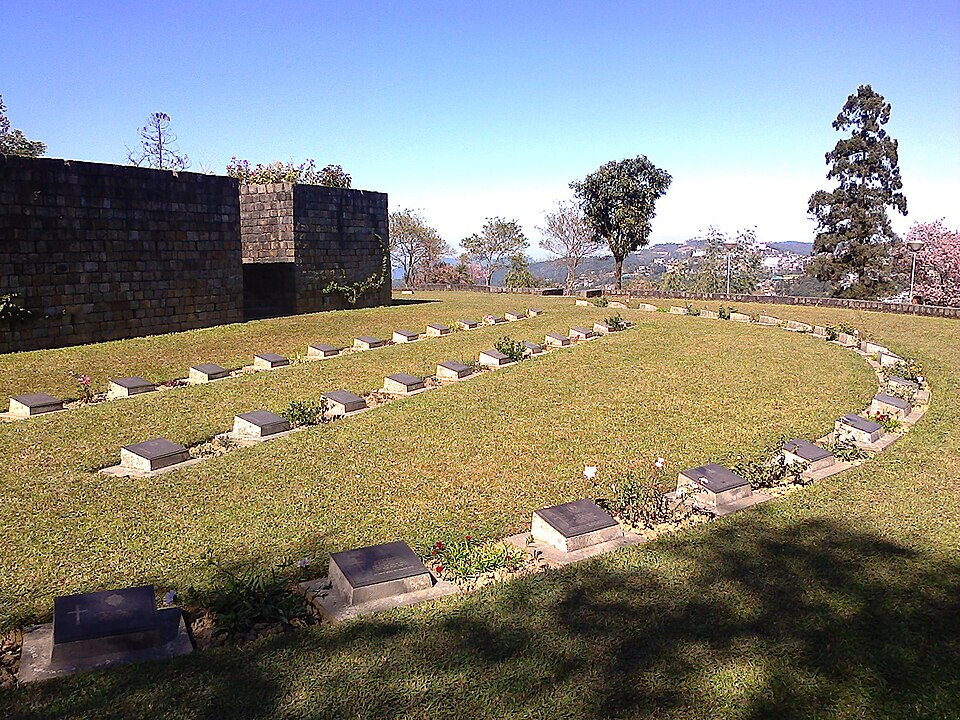
.jpg/960px-Breathtaking_beauty_of_Dzukou_Valley_in_Manipur-Nagaland_border_(edit).jpg)
.jpg/960px-View_of_Khonoma_(2024).jpg)