Himachal Pradesh, meaning land of the snowy mountains, has a history shaped by its high valleys and mountain passes. Stone tools found in the foothill valleys show that early humans lived here in prehistoric times. Ancient texts and coins mention several hill peoples and small states in the area, such as the Kunindas, Audumbaras, Trigartas and Kulutas, whose names survive in places like the Kullu valley. Many communities trace their customs and deities back to these early times.
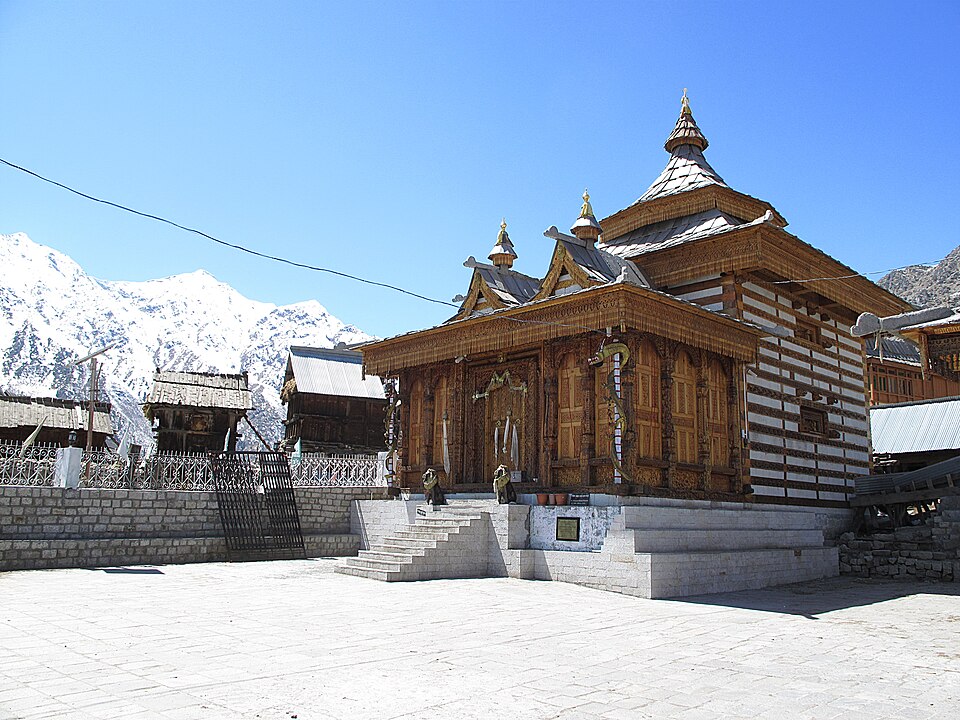
Over the centuries the region was divided into many small hill kingdoms ruled by local dynasties, often with close ties to the great powers of the plains. The rock-cut temple complex at Masrur in Kangra district, carved from a single sandstone ridge, is generally dated to around the 8th century and is a remarkable sight. Chamba was founded as a kingdom in the early medieval period, with an earlier capital at Bharmour, where ancient wooden and stone temples still stand. The Lakshmi Narayan temple group in Chamba town shows the distinctive architecture of the hills.
In the north, the cold desert valleys of Lahaul and Spiti and the Kinnaur region developed close cultural links with Tibet. Tabo Monastery in Spiti, founded in 996 CE and associated with the scholar Rinchen Zangpo, is famous for its ancient murals and is one of the oldest continuously functioning Buddhist monasteries in the Himalaya. Kangra was ruled for a long time by the Katoch dynasty, and Kangra Fort, one of the oldest forts in India, was attacked by Mahmud of Ghazni in the early 11th century and later held by the Mughals. In the late 18th century, under Raja Sansar Chand, the hill courts became renowned for Pahari miniature painting, especially the delicate Kangra style.
In the early 19th century the Gorkhas of Nepal invaded much of the hill region, and the Sikh ruler Maharaja Ranjit Singh gained control of Kangra. After the Anglo Gorkha War of 1814 to 1816 and the Anglo Sikh wars of the 1840s, the British became the dominant power, while many princely states continued under their own rulers. Shimla became the summer capital of British India in 1864, and colonial buildings such as the Viceregal Lodge recall this era. The Kalka Shimla Railway, opened in 1903, is now part of the Mountain Railways of India UNESCO World Heritage Site. Popular movements known as Praja Mandals campaigned for political rights in the princely states and joined the wider freedom struggle.
After independence about thirty princely states were merged to form Himachal Pradesh on 15 April 1948, now celebrated as Himachal Day. The state of Bilaspur was added in 1954, and Himachal became a Union Territory in 1956. In 1966 several hill areas of Punjab, including Kangra, Kullu, Shimla and Lahaul and Spiti, were merged into it. Himachal Pradesh became a full state of India on 25 January 1971, with Shimla as its capital.
Today visitors can explore this rich past in the colonial streets of Shimla, the forts and temples of Kangra and Chamba, the monasteries of Spiti and the many village shrines dedicated to local deities.
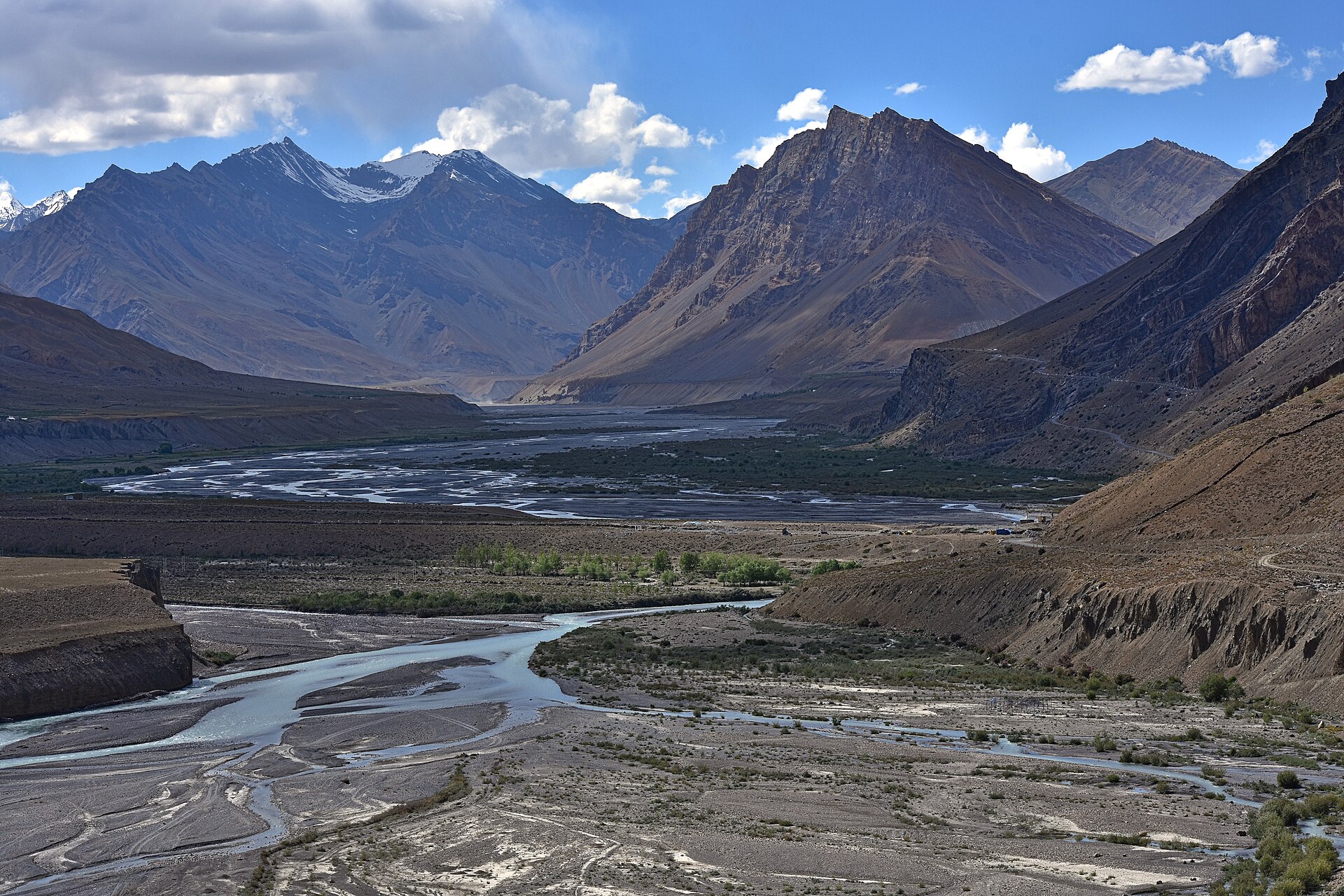
 Photo: Timothy A. Gonsalves, CC BY-SA 4.0


.jpg/960px-Dharamshala_03_(Cropped).jpg)
.jpg/960px-Kalpa_(8512894537).jpg)